Not the sports shoe brand but the famous goddess of the Greek pantheon, NIKE, the Goddess of Victory. In the latest SMITE update, the winged warrior NIKE joins the fight.
A powerful warrior, NIKE sets goals for the whole team to achieve through the course of a match. With Nike’s favour, victory is assured.
In Greek mythology, Nike flew around battlefields rewarding the victors with glory and fame, symbolised by a wreath of Laurel leaves.
Watch the reveal video for more.
SMITE – God Reveal – NIKE, Goddess of Victory
Giveaway codes for the character and her alternate skin are available, and work on all platforms once the patch is released.
Live now on PC, to follow next week on Xbox One and PS4.
Anubis Tier 5 Skin
Also revealed this update is the Anubis Tier 5 skin, the result of a community art contest and vote. This unique skin will be the reward for this year’s Odyssey in game event.
In its 20th year, Pokémon has shaken things up. With Sun and Moon, players travel to the new Alola archipelago. This region breaks with tradition; it has no gyms, new forms for old favourites, and lets players explore the narrative in a different way.
Pokémon Sun and Moon
Initial release date: November 18, 2016 Series:Pokémon Developer: Game Freak Publisher: The Pokémon Company Platform:Nintendo 3DS
Pokémon Sun and Moon are a mixed bag. Change for the sake of change doesn’t always yield the best results. The games fall into this trap from time to time. But there are a lot of things that Sun and Moon do right.
At their best, Sun and Moon feel like Pokemon Colosseum, an exciting development in an ageing franchise. At their worst, Mario Party 10: festive but doesn’t hold up to the previous entries.
SOS calls are equal parts frustration and farming.
The Good
Right around the second island, Sun and Moon hit their stride. You’ve had enough of an opportunity to know what to do. The game opens up and you start to see the organisations, Aether and Team Skull. It cultivates its narrative and brings the player deeper into the world.
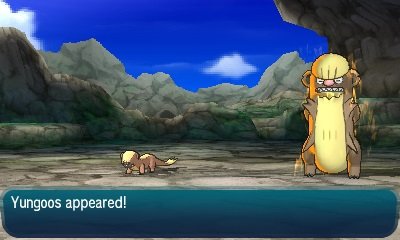
It’s also around this time that we start seeing more and different wild Pokemon. Most of the first island is inhabited with the usual dregs: Pikpek, the 7th gen Pidgey, Yungoos, the 7th gen Rattata. Other Pokemon found on the first island are largely Kanto Pokemon: Abra, Pikachu, Magnemite, and Growlithe feature prominently.
From an in-game perspective, the new Pokemon are of good design. While X & Y introduced a new type, Sun and Moon took its attention to type combinations. Salandit is a perfect example of a never-before-seen type: Fire/Poison. Some Ultra Beasts also give us odder types, like Nihilego’s Rock/Poison.
Again, in direct contrast to its predecessor, Moon aims a little smaller in the scope of its narrative. X & Y drowns under the weight of vaguely-referenced historical events. Moon’s narrative periphery is cemented firmly in the traditions of the Alolan people. There’s a sense of richness but the game’s focus largely centres on the events of Aether and Skull.
Sun and Moon are geared up for a satisfying endgame. From starter Pokemon to Champion does feel a little shorter than average. I’m inclined to forgive this, though, because once you are the champion, the game opens up new areas, new stories, and new challenges. Sadly, the Looker makes a comeback.
Thankfully, his goal this time is aid in the capture of the Ultra Beasts, not an inane, tacked-on subquest. The nature of Alola’s archipelago is that you’ll naturally bypass some areas and relish the opportunity to go back in.
Team Skull are obnoxious – even by Pokemon Team standards. Undecided on whether to be criminals or hip hop artists.
The Bad
It’s not all peaches and cream for Pokemon Sun and Moon. Although the game does shape up for a strong post-league experience, the rest of it feels like a guided tour through the Safari Zone. You’re almost never left alone.
Lillie, one of Moon’s more irritating characters, follows you around, constantly pushing you to your next objective. Indeed, the only freedom you have is to make a u-turn after completing an island. Before I felt in control of my own game, I was already around level 28.
Much of Alola feels like a wildlife safari. It’s a small thing but there is a strong case of specific types living together in one area. For example, the Fire types live on the volcano; and the Grass types live in the forest; and so on.
From a design perspective, this makes sense. It drives the concept of Alola being a place of true evolution for Pokemon. On the gameplay side, however, it hurts.
Want an Ice type but haven’t gotten to the Ice habitat (which, by the way, is towards the end of the game’s story)? Too bad. Find something else.
Sun and Moon’s extended cast is the biggest let down. All in all, about 3-5 people come with you on your journey – depending on how broad your definition is.
Lillie, Hau, Kukui are the main three. They have about two personality traits each. Clumsy but determined, happy-go-lucky and competitive, mysterious and ambitious. They wear thin. Fast.
If I see one more reference to Kukui being the Masked Royal, I might break my 3DS over my head.
The Weird
In the spirit of progress, Sun and Moon change many things. Not all are hits but they will resonate with different people.
The removal of HMs is a pretty significant change. Original games had you explore to either catch enough Pokemon (for Flash), find someone off the beaten track (Fly), or complete a challenge (Surf/Strength). Later games gave you the HMs at important parts of the story but mandated the completion of a gym.
In Alola, your Ride Pager gives you access to Pokemon that will perform the same tasks. Lapras will let you Surf, Charizard will let you Fly, and Tauros uses Rock Smash.
The sometimes ludicrous Alola Forms of old favourites take centre stage.
Overall, it’s a nice change. HMs had already morphed into an nuisance. Once they were important stepping stones to game completion or convenience. They transformed into devices to artificially inject motivation into duller portions of the game. Removing HMs has been a positive step forward.
On the other hand, a prominent feature in previews for Sun and Moon was the lack of gyms. Alola subscribes to a different method of testing its young trainers. Each island has Captains who oversee Trials. Completing the Trials of an island lets you square off against the Kahuna.
A nice idea. Ultimately, it’s a meaningless change. The names may be different but the concept is the same. After a short quest, you battle a type-restricted boss who grants you passage to the next section of the land. Sun and Moon go to great lengths to ensure you definitely know that this thing that you’re battling that looks like a gym and fights like a gym totally isn’t a gym.
Captains’ Trials give you something to do but feel more Mario Party than Pokemon.
Pokemon Sun and Moon aren’t without their warts. But they’re a worthy entry into the franchise.
I’m not convinced enough has been done in this reinvention. When a 20 year old franchise goes through a rebirth of sorts, a thin replacement of terminology and recycled plot won’t do.
It’s impossible not to get caught up in the festive atmosphere of the Alolan isles, however. When the game lets you play, it shines. It, like Colosseum before, takes the series in a new direction and weaves our expectations into a larger world.
For lovers of Pokemon, this is the game to play. Sun and Moon easily beat out Diamond, X, and Black as games and encompassing narratives.
While they may not do as much as 4th gen for altering the competitive space, Sun and Moon are what Pokemon needed.
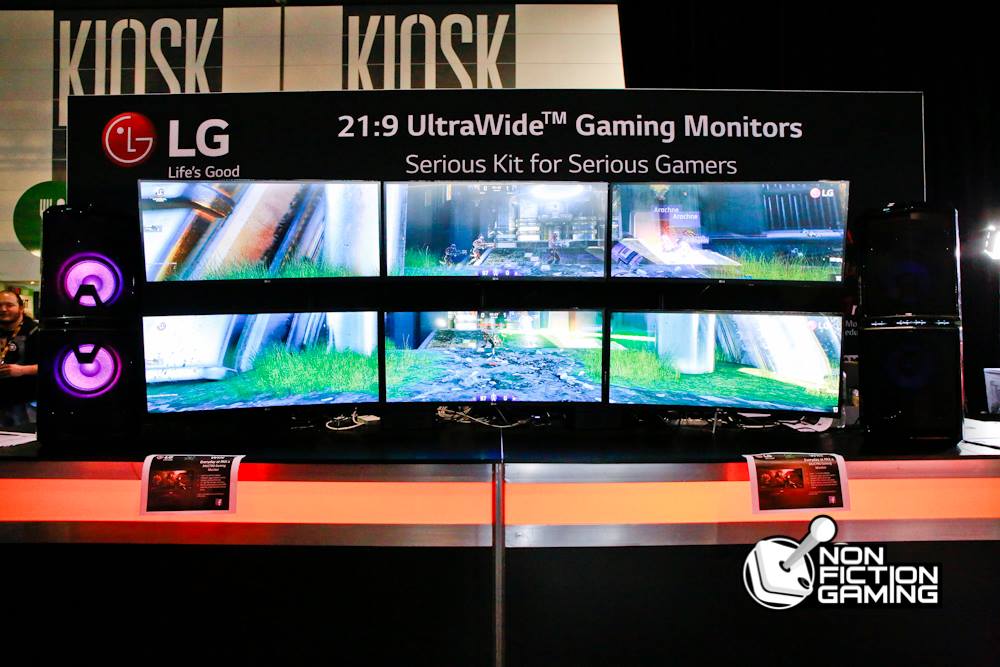
LG is a household name in Australia for its Home Entertainment and appliances, Gamers however are probably more familiar with LG’s computer monitors and eSports team affiliate ‘Dire Wolves‘.
Russ Prendergast is the IT Marketing Manager at LG Australia and has direct dealings with the Dire Wolves team. We missed each other at PAX Australia and set up a call a few weeks later to discuss what LG are up to in the gaming space.
Take a listen below as we ask Russ the important questions on the future of eSports and what LG has in the pipeline for the end of 2016 and beyond.
Listen to the Interview with Russ Prendergast below.
If the player does not show above, listen on soundcloud here.
In the interview we discuss…
Russ explains how LG is involved with eSports and the feedback they’ve been getting from their first big PAX Australia appearance.
What kind of hardware the pro players are using to train. Why eSports offers massive sponsorship exposure to certain brands over conventional sports.
Child’s Play, the videogame industry’s most giving charity, has officially begun its 2016 holiday fundraising drive.
Established in 2003, Child’s Play has distributed more than $40 million USD in donations from the staggering support of the video game community, bringing the universal joy of “play” to children staying at more than 200 hospitals and domestic violence shelters across the globe.
As part of this year’s drive, the 2016 Child’s Play Charity Auction will take place Thursday, 8 Dec. at the Meydenbauer Center in Bellevue, Washington. Participants will have the opportunity to bid on a life-sized Iron Battle Axe replica from Destinyand more than 100 other items. Tickets can be purchased for $145 USD a seat or $5000 USD for table of ten sponsorship.
Amazon, Humble Bundle, Wizards of the Coast and the Bungie Foundation are devoting their time and money to assisting the charity as corporate sponsors. Desert Bus for Hopeonce again held their marathon gaming session, raising $694,810 USD from online viewers for Childs’s Play.
“The mission of Child’s Play is to create moments of happiness and connection for children and their families in tough circumstances, whether at one of our partner hospitals, or in the domestic violence shelters we support,” said Jerry Holkins, co-founder, Child’s Play. “It’s a mission gamers worldwide have supported year after year and, with their support, we’ll continue to meet that need.”