The rise of E-Sports has been one of the most talked-about elements of the modern gaming world. With thousands of E-Sports competitors coming together in leagues, tournaments and competitions all over the globe, and major multi-national companies vying for the opportunity to sponsor the most successful teams, E-Sports long ago moved out of the shadows.
E-Sports is now an integral part of the online world, and many of the best players are earning global fame for their skills. Professional gaming is now such an accepted phenomenon that it is possible to bet on Esports just as you can bet on any other sport, and there are thousands of new sites dedicated to covering the various aspects of E-Sports competition.
But while E-Sports may seem to be a dramatic new phenomenon, there has always been a competitive element to gaming, which is often incorrectly portrayed in the media as a solitary pastime. In fact, the desire not only is the desire to put our skills against our peers a normal instinct, but it has also been a persistent element among the video gaming community from the beginning.
Humble Beginnings
It may surprise some people to learn that the first ever E-Sports tournament happened as long ago as 1972. In October of that year, students at Stanford University were invited to compete against one another on Spacewar, one of the world’s first video games, with the first prize a year’s subscription to Rolling Stone magazine. E-Sports prizes have improved a great deal since then!
The Rise of Gaming
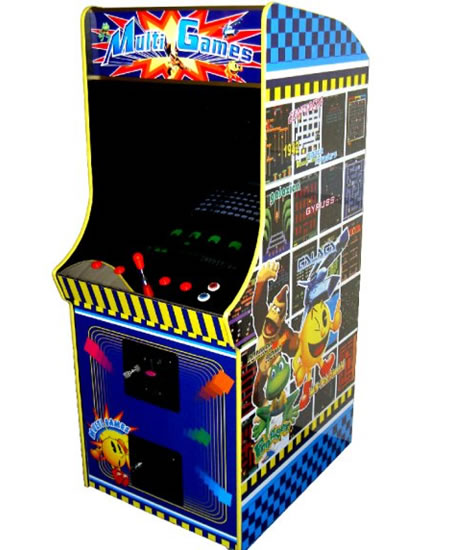
As video game technology developed, the wider public began to become familiar with gaming, and at arcades across the world, games such as Space Invaders became a common sight.
A number of publications including the Guinness Book Of World Records began to note game-related statistics, including record high scores, and in 1980, the Space Invaders Championship was able to attract more than 10,000 competitors and plenty of media coverage.
The Internet
Video gaming continued to grow in popularity, but in the 1990s, the arrival of the internet and the World Wide Web proved to be a game changer. By connecting gamers all around the world, video gaming became a truly social activity and made it possible to envisage online competitions. At the same time, companies such as Nintendo began sponsoring video game tournaments.
Red Annihilation
The evolution of E-Sports took a great leap forward in 1997. That was the year of the famous Red Annihilation tournament. Based on the popular game Quake, the tournament attracted 2,000 players, with the winner earning a Ferrari belonging to Quake’s lead developer John Cormack!
The success of the Red Annihilation tournament inspired the creation of the world’s first significant gaming league just a few weeks later. The Cyberathlete Professional League (CPL) held their inaugural tournament that year and became the first of many new leagues and tournaments that appeared in the late 1990s and around the turn of the millennium.
StarCraft
While Quake and Space Invaders had played a part in the evolution of E-Sports, it was another popular game that was to drive the next stage. StarCraft was a revelation when it was released, offering a combination of fast-thinking and strategy that would become known as Real Time Strategy gaming.
The game soon became a staple of the fledgling E-Sports world, and along with its successor, StarCraft II, has inspired millions to enter competitive E-Sports, and the Global StarCraft 2 League based in South Korea attracts more than 50 million viewers.
Rapid Expansion
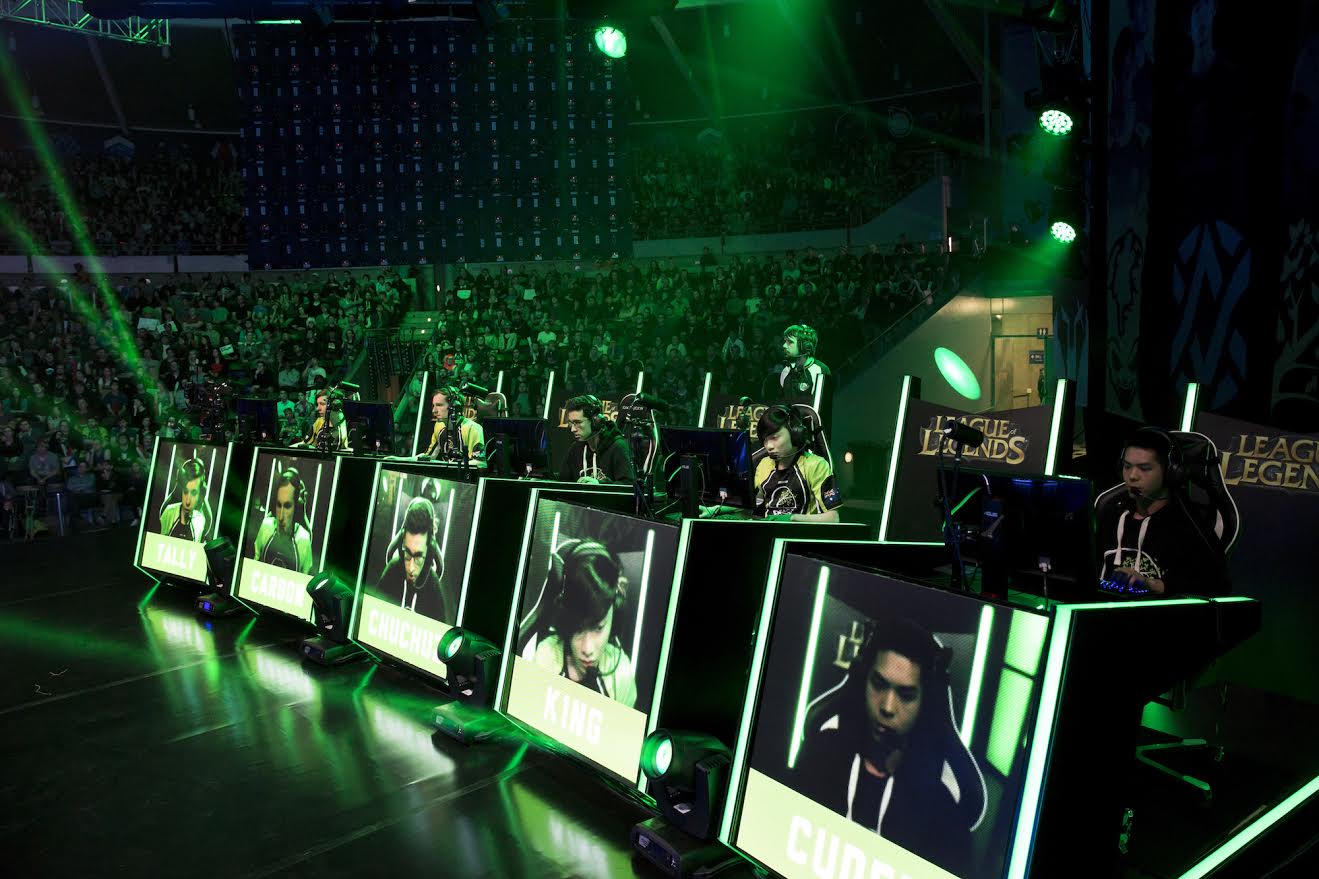
The E-Sports industry expanded rapidly during the 2000s, and a host of major tournaments were set up, including the Electronic Sports World Cup and the World Cyber Games, which were closely followed by Major League Gaming. Meanwhile, new games have entered the equations, including Defence of the Ancients (Dota), which, along with League Of Legends, helped to establish the Multiplayer Online Battle Arena or MOBA genre, which has dominated E-Sports in the last ten years.
The Present
E-Sports is now a well-established component of the gaming industry, with over $100 million in prize money earned by the leading players and teams every year and close to 4,000 tournaments staged around the globe, as companies aim to associate themselves with the sport. At the International tournament in 2017, the prize pool was a record-breaking $24.6 million.
According to some estimates, the annual revenue for E-Sports, including broadcasting rights, game sales and associated earnings, could surpass $1.5 billion by 2020, and the pace of development that has propelled competitive gaming from a niche pastime for students to a global phenomenon has shown no sign of slowing.
The Future
Given the rapid growth of the E-Sports phenomenon, it is difficult to predict with any precision how it will develop in the future. The rapid strides being made in new technology offer the possibility of VR and AR gaming and ever greater degrees of interactivity between players and audience, and as the video games industry continues to push back the boundaries of ingenuity with new and exciting games, we can’t wait to see what the future of E-Sports will bring!
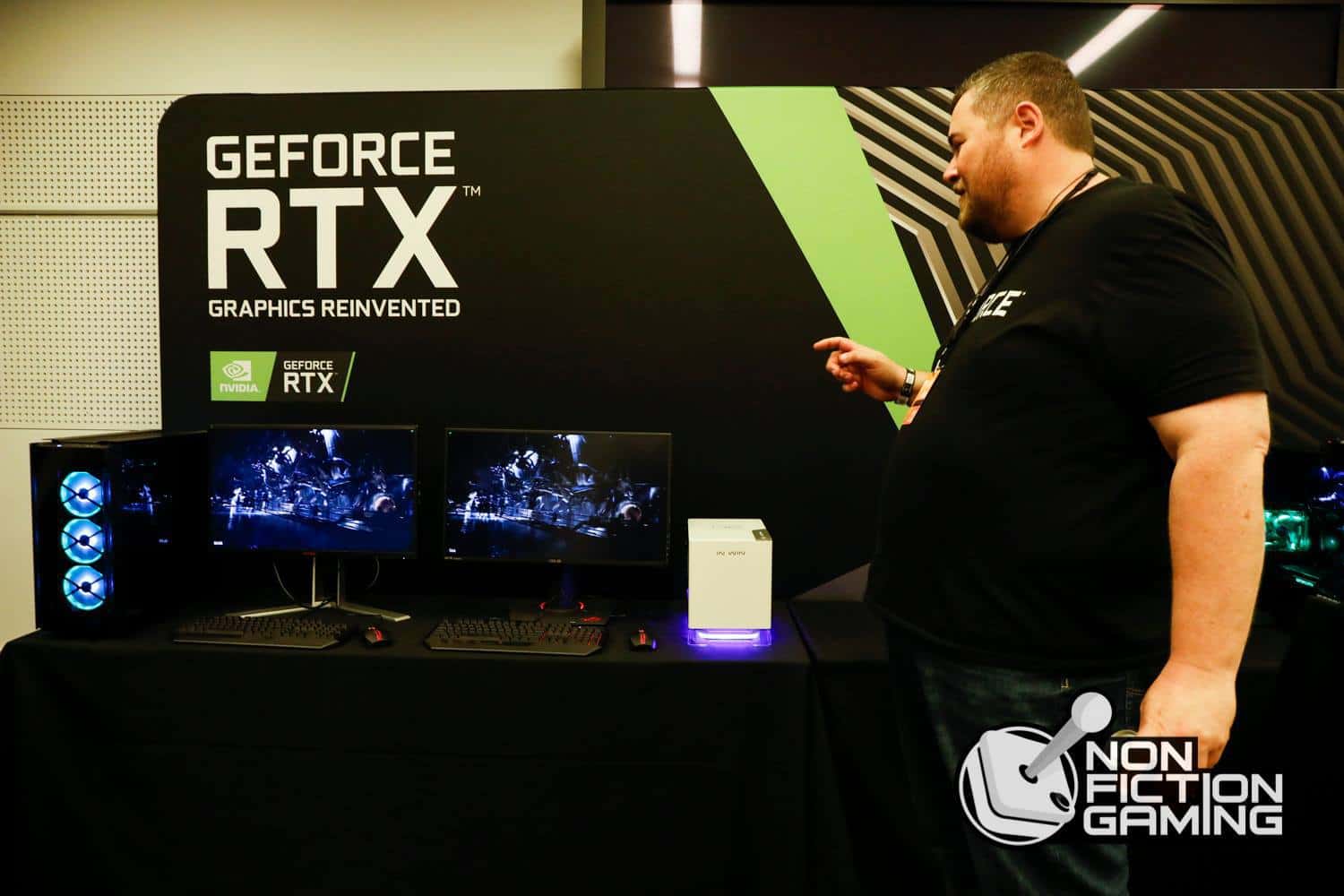
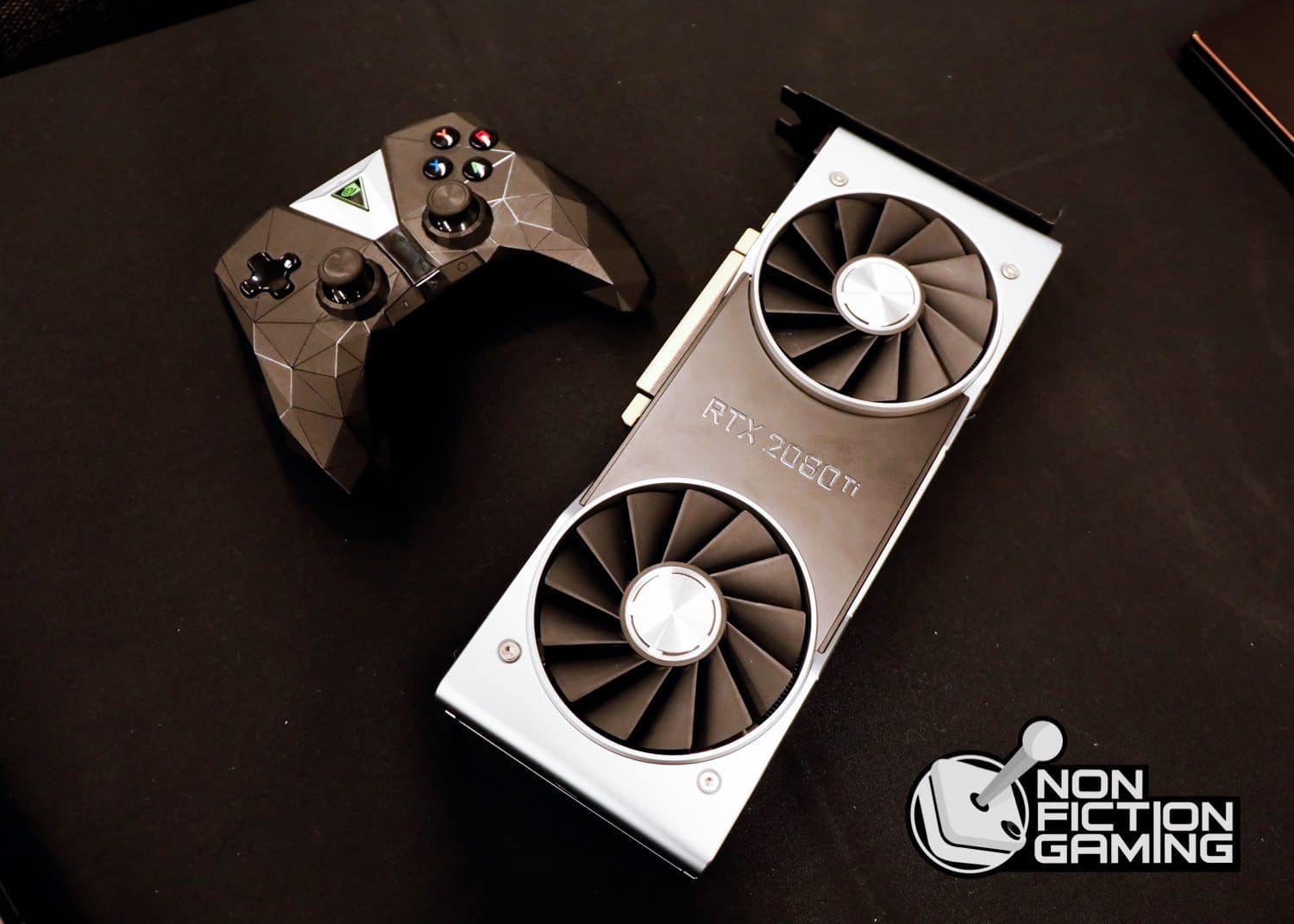
Nvidia was front and centre at PAX Australia this year, giving customers a chance to go hands-on with their new Nvidia GeForce GTX 20 series.
We were ushered to a quiet space off the show floor where we could get a look behind closed doors at the power under the hood.
Nvidia launched its next-generation GeForce RTX 20-series graphics cards on September 20, starting with the GeForce RTX 2080 and GeForce RTX 2080 Ti.
These new cards all use the new Nvidia Turing architecture, which boasts more cores than the previous generation Pascal architecture, along with significant updates that should deliver more performance per core.
The two main features we were drawn to are the real-time ray tracing, and the deep learning Tensor cores.
What is ray tracing?
Ray tracing is a rendering technique that can produce more realistic lighting effects. The algorithm traces the path of light, and then simulates how that ray of light interacts with objects before hitting the camera or player.
Ray tracing has been used extensively for CGI in animated films and TV shows, mostly because server farms can make these calculations when rendering the final product. You may be familiar with the concept if you know the difference between ‘live’ and ‘pre-rendered’ cutscenes in games.
Why should I care about ray tracing for games?
Nvidia’s new G20 series cards along with Microsoft’s DirectX Ray Tracing (DXR) API means that more developers are starting to support ray tracing.
Until I had seen Ray tracing on the RTX in action I thought current video game graphics standard of rasterization was fine…
On watching the Star Wars video below, I noticed reflections in armour, shadows and light from off screen interacting with the subjects. This is what ray tracing provides, an increased sense of immersion.
Nvidia has somewhat cursed me now because I’m going to be disappointed when I don’t see a reflection in a puddle or light from an explosion in a car door.
This is all well and good, but developers will need to provide ray tracing for you to get the most out of the Nvidia G20 cores.
According to Tony Tamasi, senior vice president of Content and Technology at NVIDIA, the ray tracing features in games will begin to ramp up as developers get on board.
“Thanks to the AI and hardware light-ray acceleration built into GeForce RTX GPUs, games using these futuristic features are right around the corner.”
We got the opportunity to play Metro Exodus with a button to turn RTX on and off. The results surprised me. The game felt darker and scarier with RTX on, shadows were darker and when holding a light source you felt a greater sense of realism to the effects.
I was even gently chastised by the Nvidia team for turning off RTX when entering a dark cavern because global illumination without RTX let me find secrets easier.
The atmosphere created by ray tracing ends up being one you miss when it’s no longer being shown to you.
At least 11 games have announced support for Nvidia’s RTX ray tracing.
Here’s the current list:
Assetto Corsa Competizione from Kunos Simulazioni/505 Games
Atomic Heart from Mundfish
Battlefield V from EA/DICE
Control from Remedy Entertainment/505 Games
Enlisted from Gaijin Entertainment/Darkflow Software
Justice from NetEase
JX3 from Kingsoft
MechWarrior 5: Mercenaries from Piranha Games
Metro Exodus from 4A Games
ProjectDH from Nexon’s devCAT Studio
Shadow of the Tomb Raider from Square Enix
Tell me about the Turing Tenser Cores
The other half of the Nvidia equation on bringing us better looking games is the Tenser core.
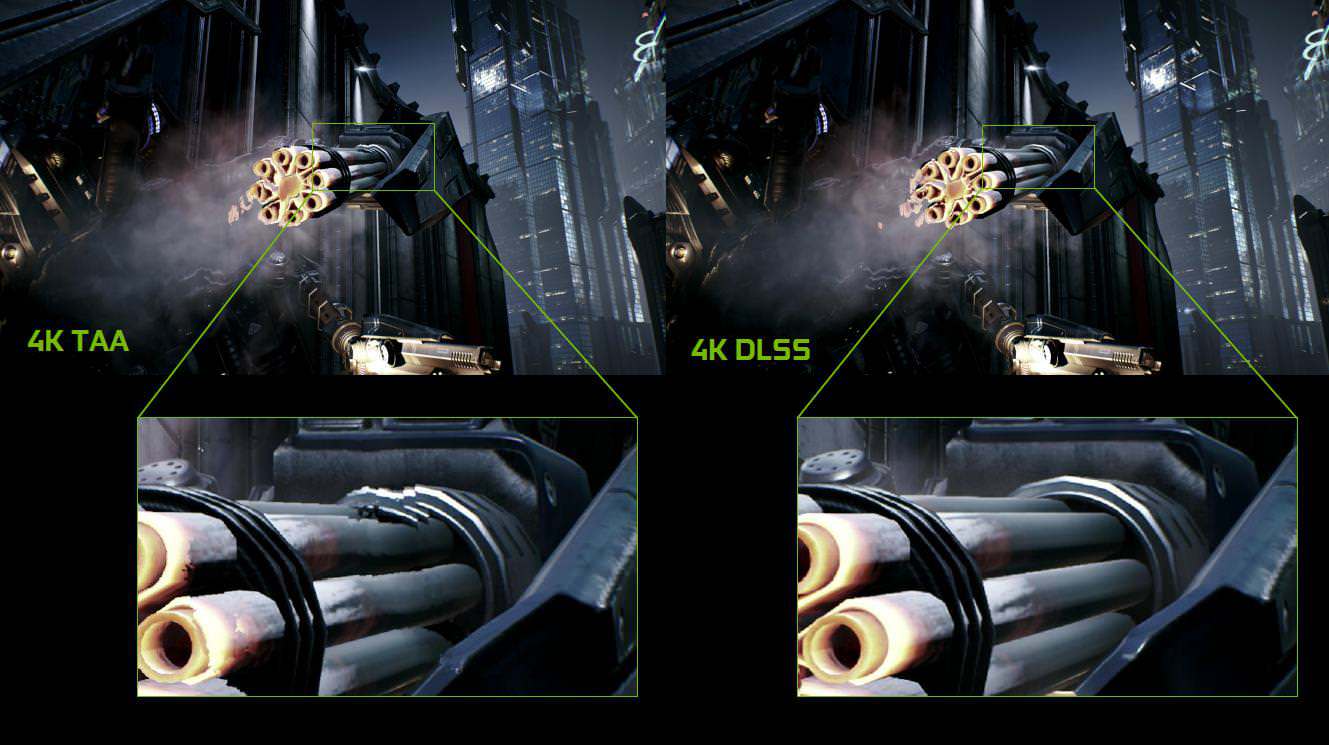
Using deep neural network processing, GeForce RTX GPUs also support Deep Learning Super-Sampling (DLSS), a technology that applies deep learning and AI to rendering techniques, resulting in crisp, smooth edges on rendered objects in games.
This AI-based anti-aliasing algoritm can offer improved image quality compared to other algorithms, the trade off is that developers will need to send their games to Nvidia to be run through their supercomputer.
“If you’re unfamiliar with DLSS, this new RTX technology uses the power of deep learning and AI to train the GPU to render crisp images, while running up to 2x faster than previous generation GPUs using conventional anti-aliasing techniques. You’ll be hearing much more about DLSS, NVIDIA RTX ray tracing, and the other features of GeForce RTX graphics cards in the coming weeks,” Nvidia says.
DLSS isn’t an instantly noticeable difference unless there’s a lot of action happening on screen. The main improvement you’ll likely find is a higher frame rate over other systems. Tenser cores are aiming to keep you at that smooth looking 60+ frames territory.
Here’s the complete list of DLSS supported games:
Ark: Survival Evolved
Atomic Heart
Dauntless
Darksiders III
Deliver Us The Moon: Fortuna
Fear The Wolves
Final Fantasy XV: Windows Edition
Fractured Lands
Hellblade: Senua’s Sacrifice
Hitman 2
Islands of Nyne
Justice
JX3
KINETIK
Mechwarrior 5: Mercenaries
Outpost Zero
Overkill’s The Walking Dead
PlayerUnknown’s Battlegrounds.
Remnant: From The Ashes
SCUM
Serious Sam 4: Planet Badass
Shadow of the Tomb Raider
Stormdivers
The Forge Arena
We Happy Few
Is the Nvidia GeForce 20 series worth the price tag?
If you’ve looked at the list of games above and seen some that stand out like PUBG or Battlefield 5, you’re going to be awfully tempted by the GeForce RTX 20-series.
The brief time we had with ray tracing for Metro Exodus has certainly made me a believer in the verisimilitude of improved lighting effects.
So when it comes time to upgrade, it may be worth weighing that AUD$1,899 price tag.