

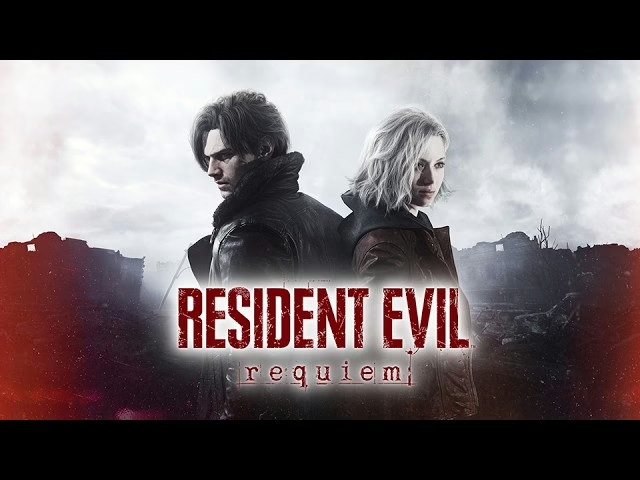
The Resident Evil: Requiem is one of those entries that feels like it’s carrying the weight of the entire franchise on its shoulders — and for the most part, it actually delivers. This is the ninth mainline game, and instead of playing it safe, Capcom leans into both sides of what Resident Evil has become: slow, oppressive horror and full-on action.
If you’ve been around since the older games, you’ll recognise a lot here. If you haven’t, it still does a decent job of pulling you in. Either way, this is a game that’s trying to be a bit of everything — and surprisingly, it mostly works.

Specs That Actually Matter
Here’s the quick breakdown:
Released February 27, 2026
Available on PS5, Xbox Series X/S, PC, and Switch 2
Built on the RE Engine
Dual protagonists: Grace Ashcroft and Leon S. Kennedy
First-person and third-person gameplay options
Single-player survival horror experience
The key thing here is the dual-character structure. You’re not just playing one style of game — you’re switching between two completely different approaches to survival horror.
Story and Structure
Without getting into spoilers, the story follows FBI analyst Grace Ashcroft investigating a series of deaths tied back to Raccoon City, alongside series veteran Leon S. Kennedy.
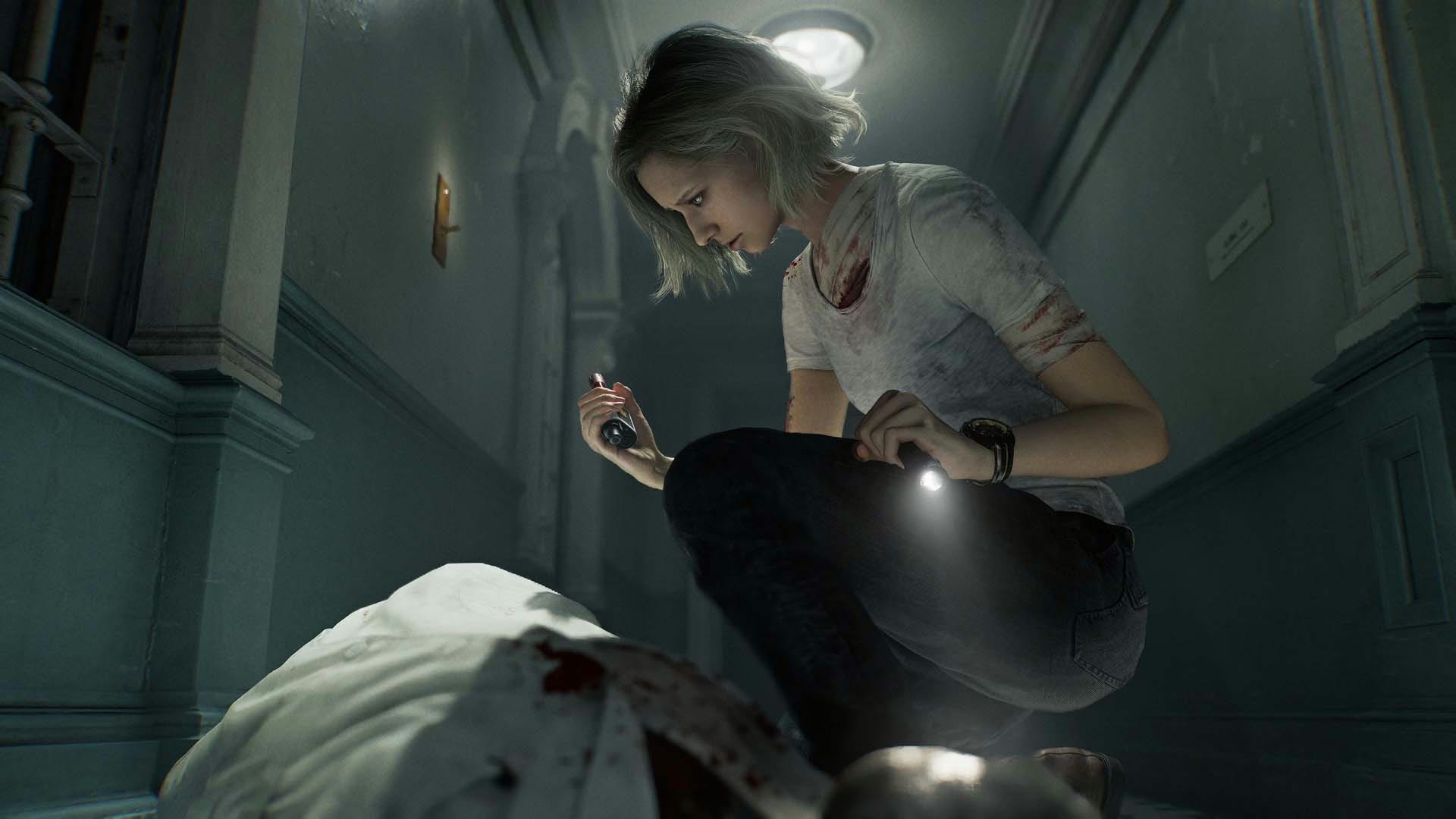
Grace’s sections lean heavily into psychological horror — slower pacing, limited resources, more tension. Leon’s side is much more action-driven, with bigger encounters and heavier combat.
It’s a smart split. It keeps the pacing from getting stale, and it lets the game appeal to both sides of the Resident Evil fanbase.
That said, the back half leans pretty heavily into franchise history. If you’re deep into the lore, you’ll appreciate it. If you’re not, it can feel a bit like the game expects you to already care.
Gameplay Feel
This is where Requiem really lands.
Grace’s sections feel tense in the right way. Limited ammo, tight spaces, and a constant sense that something is just around the corner. It leans into that Resident Evil 7-style vulnerability, and it works.
Leon’s sections are faster, louder, and more aggressive. Think more along the lines of Resident Evil 4 — movement is quicker, combat is more fluid, and encounters are bigger.
The ability to swap between first-person and third-person perspectives adds flexibility. It’s not just a gimmick either — it genuinely changes how the game feels moment to moment.
Atmosphere and Visuals
This is easily one of the strongest parts of the game.
The RE Engine continues to do some heavy lifting here. Environments are dense, lighting is moody, and interiors feel claustrophobic in a way that adds to the tension. There are moments where the game just slows you down and lets the environment do the work — and those are some of the best parts.
If you’re running it on higher-end hardware, features like advanced lighting (including path tracing) take things even further. Shadows, reflections, and subtle environmental details all add to the overall immersion.
It’s not just “good looking” — it actively contributes to the horror.
Combat and Enemy Design
Combat feels tight and responsive across both playstyles.
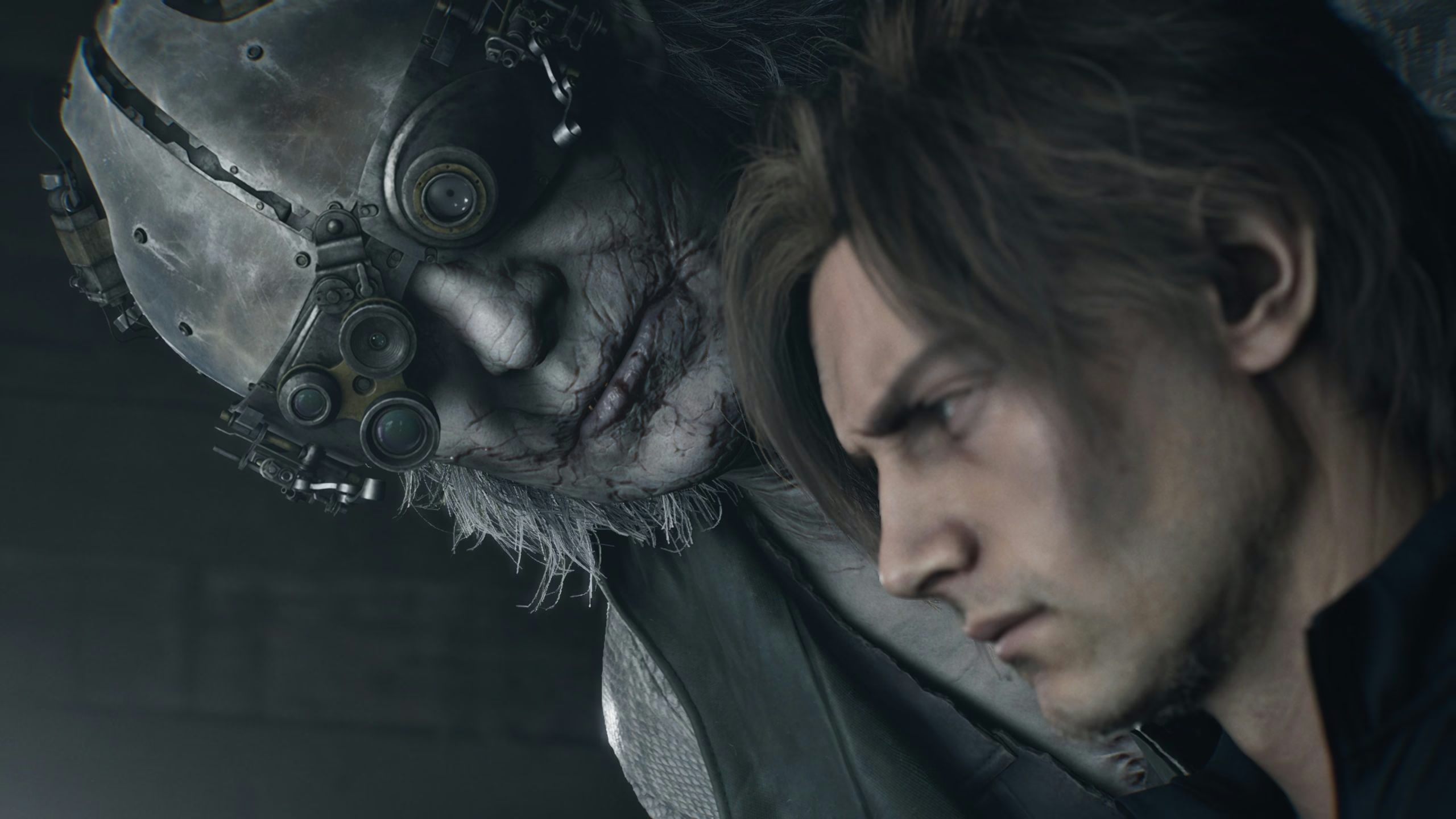
Enemies are a standout. They don’t just shamble around — there’s a bit more intent behind how they move and react, which adds tension even in familiar scenarios. You can’t always rely on the same habits you’ve built from older games.
Leon’s sections give you more tools to deal with them. Grace’s sections? Not so much. And that contrast keeps things interesting.
Pacing and Replayability
The pacing is generally strong. Switching between characters helps avoid fatigue, and the mix of horror and action keeps things moving.
There are moments where the game dips — especially later on, where it leans a bit too hard into legacy callbacks — but it never fully loses momentum.
Replayability is solid. Between different difficulty settings, collectibles, and the dual-character structure, there’s a reason people are going back for multiple runs.
Australian Pricing
In Australia, Resident Evil: Requiem sits at standard AAA pricing — around $100–$120 AUD depending on platform and edition.
Pretty standard for a new release, and considering the production value and length, it feels justified.
Pros
Strong balance between horror and action
Dual protagonists keep gameplay fresh
Excellent atmosphere and environmental design
Flexible first-person and third-person gameplay
High replayability
Cons
Leans heavily on series history in the later sections
Some pacing dips toward the end
Not all gameplay styles will appeal equally to everyone
Final Verdict
Resident Evil: Requiem feels like a culmination of everything the series has learned over the years. It doesn’t fully commit to one direction — horror or action — but instead blends both in a way that mostly works.
Grace’s sections bring back that slow, uneasy tension. Leon’s sections give you the payoff with faster, more aggressive gameplay. Together, they create a rhythm that keeps the experience engaging from start to finish.
It’s not perfect, and it leans a bit too hard on nostalgia at times. But when it hits — and it hits often — it reminds you exactly why Resident Evil is still one of the strongest franchises in the genre.
If you’re a fan of the series, this is an easy recommendation. If you’re new, it’s still a solid entry point — just expect a few moments where the game assumes you’ve been here before.

