

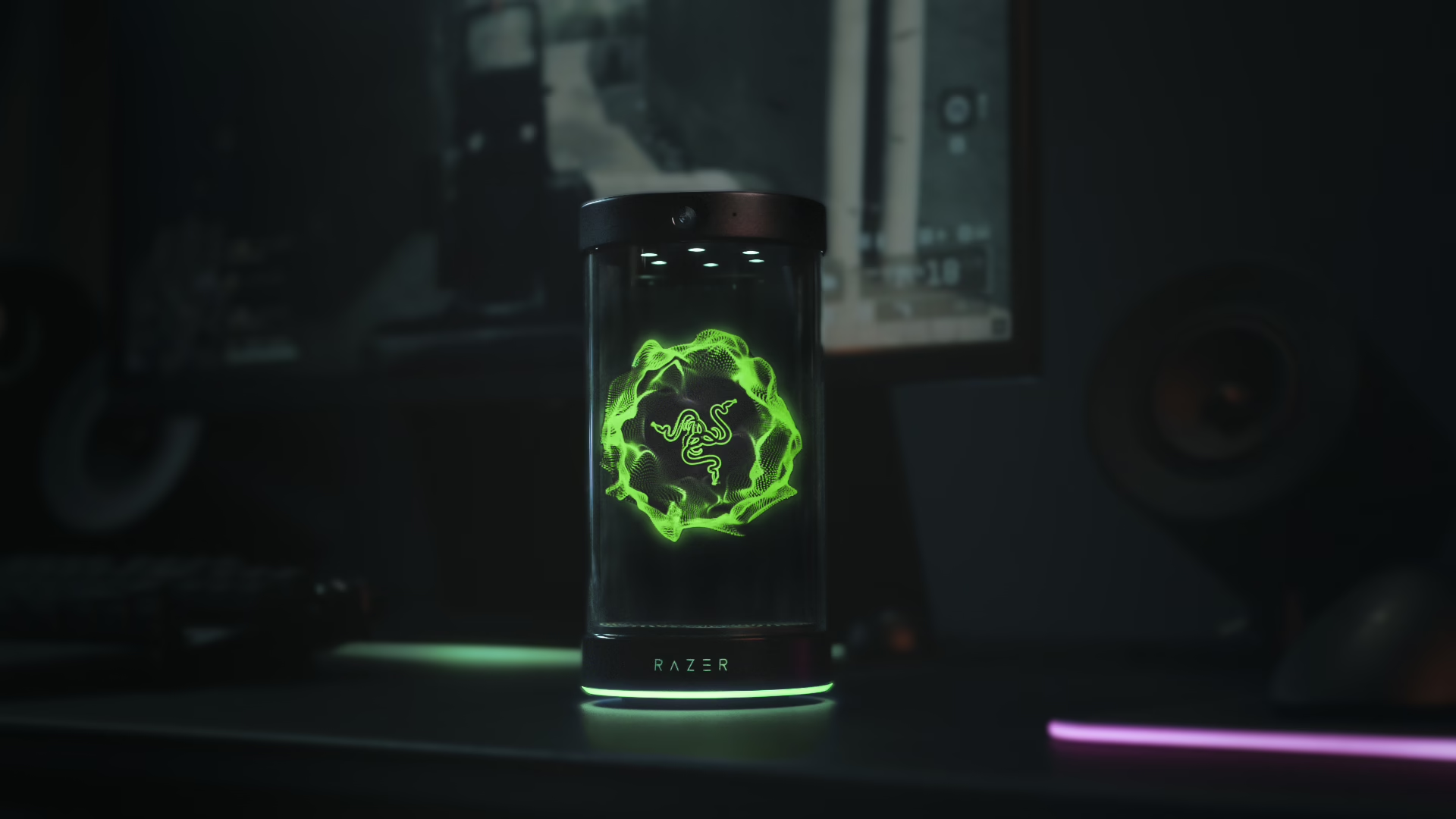
Razer used GDC 2026 to show off what it calls the “Future of Play.”
In simple terms, it’s a set of AI-powered tools designed to make game development faster, testing easier, and gameplay more immersive.
Three announcements sit at the centre of it:
- Razer AVA – an AI companion that can actually perform tasks
- Razer QA Companion-AI – automated testing and bug reporting
- Razer Adaptive Immersive Experience – dynamic lighting, haptics, and audio that adapt to gameplay
The pitch is straightforward: remove friction from development without replacing the people actually making the games.
With the global games market expected to hit $206.5 billion by 2028, tools that speed up development without hurting quality are becoming more important.
Let’s break down what Razer is actually showing.
Razer AVA: AI That Actually Does Things
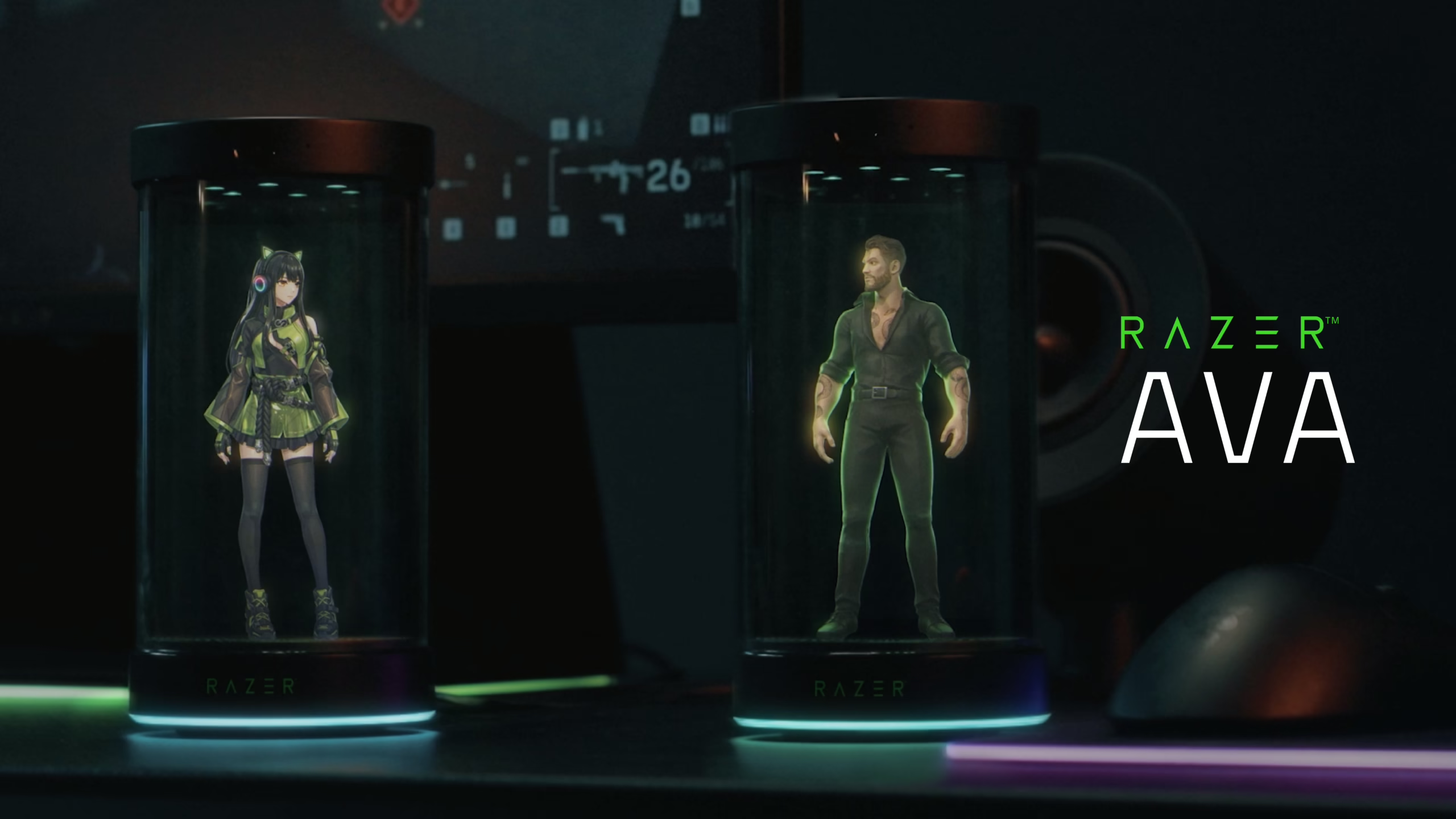
Razer first revealed Project AVA in 2025, then turned it into a holographic desk companion at CES 2026.
At GDC 2026, it’s evolved into something more practical.
AVA now works as an agentic AI assistant. Instead of just answering questions, it can take a goal and turn it into actions across apps and services.
Think less chatbot, more task assistant.
Key features include:
- Razer Inference Control Plane that routes requests between local and cloud AI models
- App integrations so AVA can interact with supported services like Spotify
- Agentic workflows that break user requests into multi-step tasks
- Companion coordination, allowing AVA assistants to schedule meetings or manage shared tasks between users
The goal is simple: automate small tasks so users spend less time managing software and more time actually working.
The AVA beta is opening through Razer Cortex, with early access expected in Q2 2026.
QA Companion-AI: Automating the Boring Parts of Testing
Game testing takes time. A lot of it.
Razer’s QA Companion-AI, first introduced at GDC 2025, is designed to handle the repetitive parts.
The biggest update this year is zero-integration deployment.
That means no SDKs, plugins, or code changes.
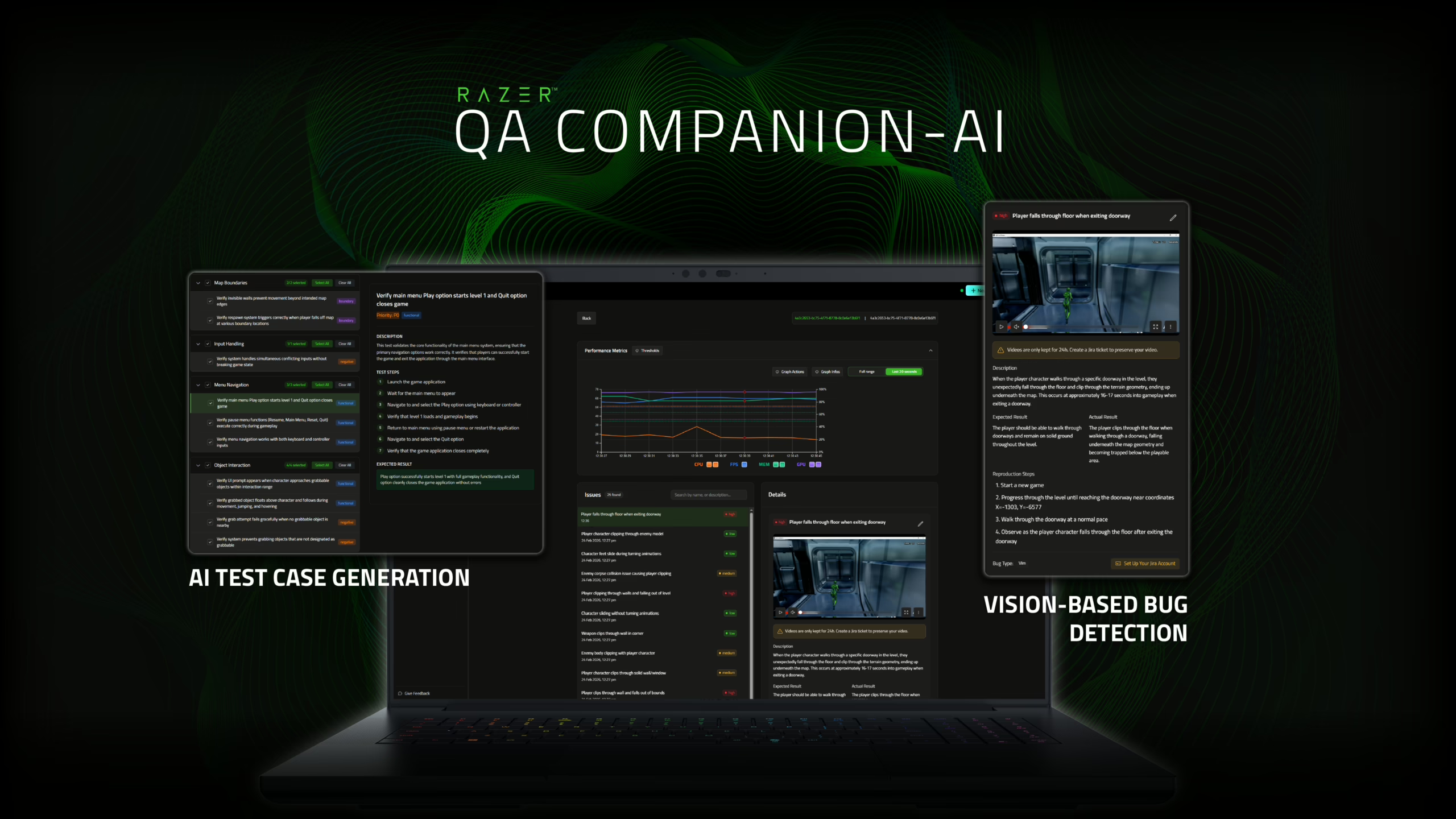
Instead, the system analyses gameplay footage and automatically detects issues like physics bugs, animation glitches, rendering errors, or collision problems.
New capabilities include:
- Zero-integration testing that works with existing builds
- AI-generated test cases created from prompts or design documents
- Vision-based bug detection using gameplay recordings
- AI gameplay agents that run test cases automatically and return pass/fail results
- Simple onboarding via a lightweight bridge app
The idea isn’t to replace QA teams. It’s to remove the repetitive testing and documentation so they can focus on actual gameplay feedback.
Adaptive Immersive Experience: Making Games Feel More Dynamic
The third announcement is about immersion.
Razer Adaptive Immersive Experience is a runtime that dynamically controls haptics, lighting, and spatial audio based on what’s happening in a game.
Instead of developers scripting every effect manually, the system generates ambient feedback in real time.
It works alongside developer-authored effects rather than replacing them.
The platform ties together several existing Razer technologies:
- Razer Sensa HD Haptics
- Razer Chroma RGB
- THX Spatial Audio+
One of the bigger additions is Dynamic Haptics.
This combines handcrafted haptic effects with Audio-to-Haptics, which converts in-game audio into tactile feedback automatically.
Key capabilities include:
- Real-time generated effects based on gameplay signals
- Plug-and-play effect libraries compatible with Unity and Unreal
- Native Wwise integration for existing audio pipelines
Razer says developers can integrate the system in as little as three days, which could make multi-sensory support far easier to implement.
The Bigger Picture
Taken together, these announcements show where Razer thinks development is heading.
More AI support behind the scenes.
Less time spent on repetitive tasks.
More dynamic player experiences.
It’s still early for some of these tools, but the direction is clear.
The goal isn’t replacing developers.
It’s giving them tools that let them build faster — and spend more time on the parts that actually make games great.
You can check out Razer Here

